Bluesky
 LinkedIn
 GitHub
T3 Code added theme support so I built 21
Plus a simple example of how powerful hillclimbing can be.
When T3 Code shipped custom theme support, I wanted one theme to make an app I stare at all day feel a little more alive. One theme turned into a gallery of 21 animated themes that move while your agent is working and settle down when it finishes.
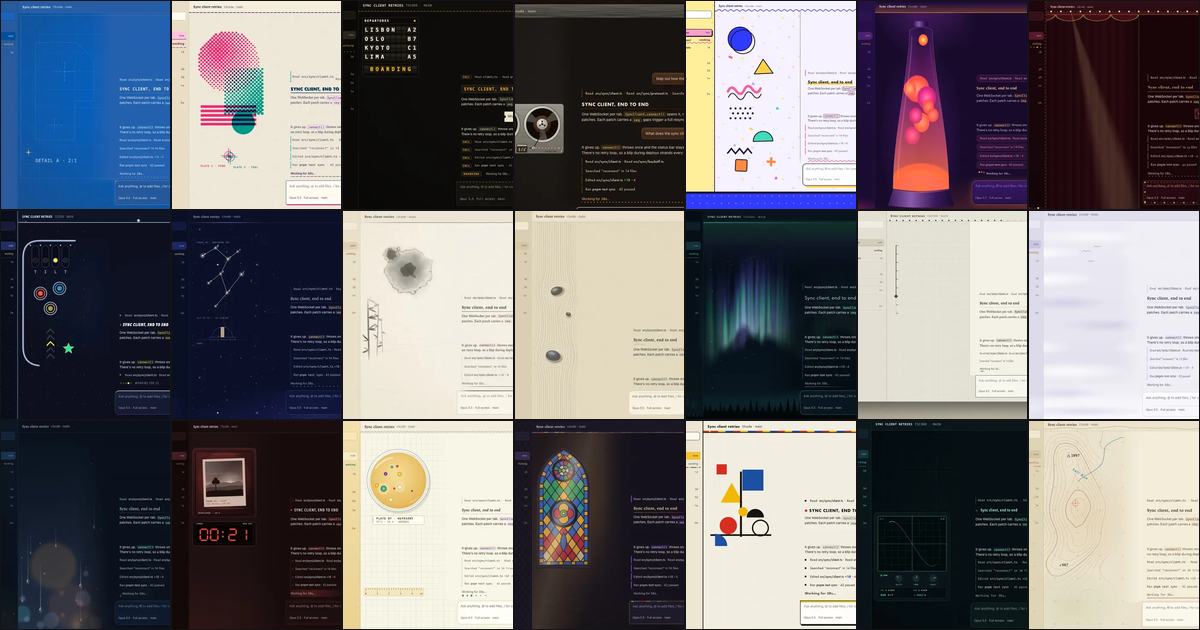
You can preview all of them on the main themes page - hover over any theme (or tap on a phone) to watch it run, filter by mood or light and dark mode, and click through to install whichever one fits. Along the way, it turned into a simple example of how far hillclimbing can take an agent, even on visual work where there's no compiler or test suite to grade the result.
My Daily Driver: Blueprint
It all started with Blueprint, which is still my favorite and the one I've been using every day for a while now.
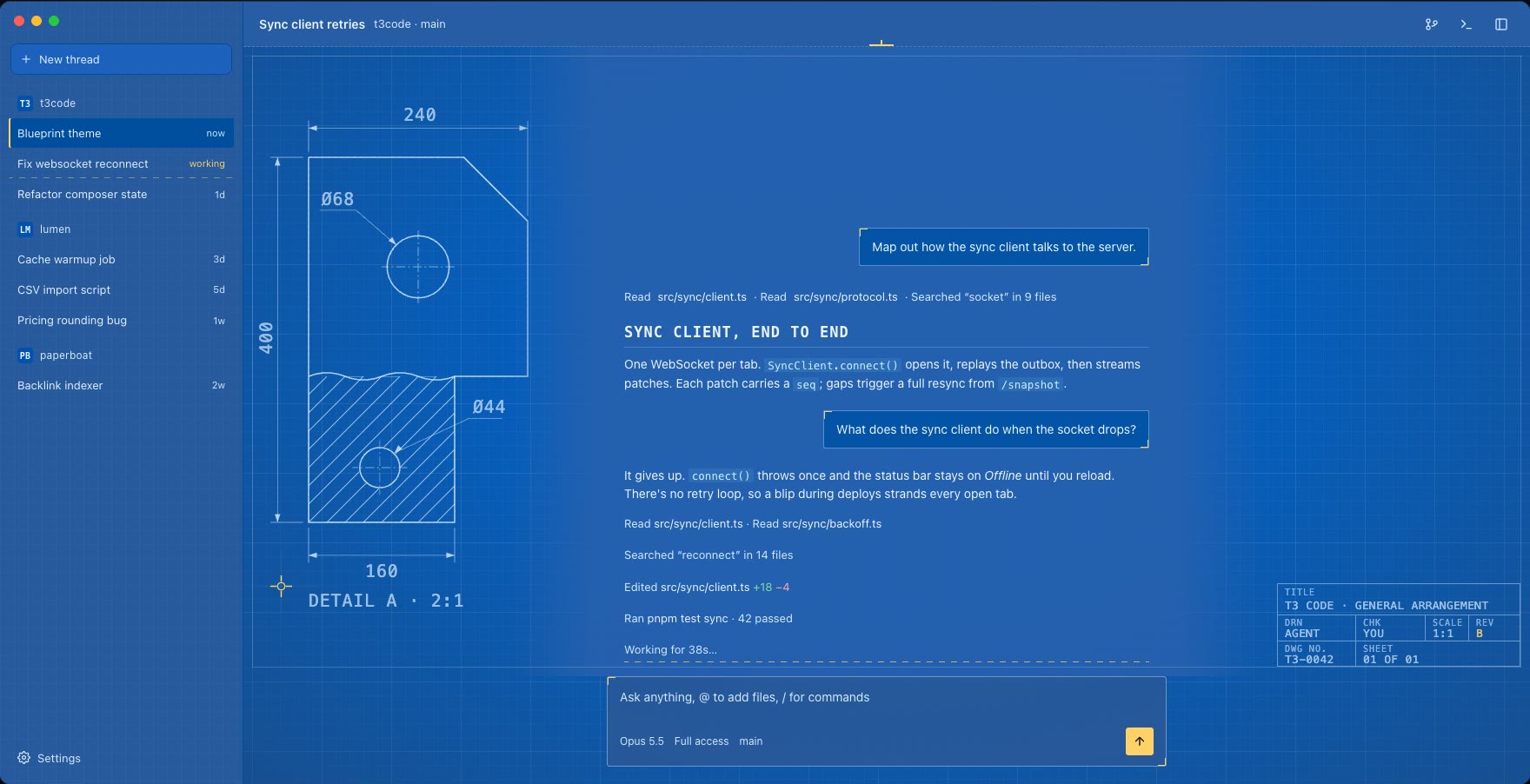
It looks like a drafting sheet: bright blue paper, crisp white text, and yellow reserved for things that actually want your attention. While the agent is working, a pen plotter sketches a part in the margin and busy threads animate in the sidebar. As soon as the turn finishes, the pen parks and the whole sheet goes still so nothing distracts you while you read.
The only manual steer I gave it after living in it for a few days was asking for a brighter blue instead of the original dark navy. Once we switched it over, it stuck as my daily driver.
The Prompt That Started It
I didn't write a design spec or hand-tune any styling. Here is the entire prompt I used to kick off Blueprint:
Let's create a new theme for t3code and make it the current one. It should be blueprint themed and feel alive, with animations that make it feel like work is being done. Be creative, I'm looking for something fun but that also isn't so noisy it interferes with the work. Each time you have a draft ready ask a Fable subagent to review it and give it a score out of 100. Continue iterating until you get a score > 90.
That short prompt did three important things:
- It described the feel and the trade-off ("fun and alive, but not noisy") instead of micromanaging the design.
- It split the builder from the critic, bringing in a fresh reviewing subagent (Fable) to judge every draft instead of letting the builder grade its own work.
- It gave the loop a score and a finish line, turning a vague creative request into a hill the agent could actually climb.
From there, the agent went back and forth with the reviewer on its own, fixing the issues it raised round by round until the score climbed from the low 70s into the high 80s. Once Blueprint worked, I pointed that same loop at 20 more themes in parallel and put the main gallery page on top so you can browse all 21 in one place.
Why Hillclimbing Works Here
We tend to assume autonomous agent loops only work when there's a compiler or a unit test at the bottom. Visual design feels too subjective for that.
In practice, pairing a builder with a strict, fresh critic and a concrete score gets you surprisingly far. The builder proposes, the reviewer calls out what isn't working and scores it, and each round moves the result up the hill. My role was closer to what I wrote about in On Orchestration: set the prompt and the loop, step in for a couple of taste calls, and decide when the output is good enough to ship.
Go browse all 21 in motion on the T3 Code Themes gallery, or jump straight to Blueprint if you want to try my daily driver. If one of them sticks for you, let me know which one.