Bluesky
 LinkedIn
 GitHub
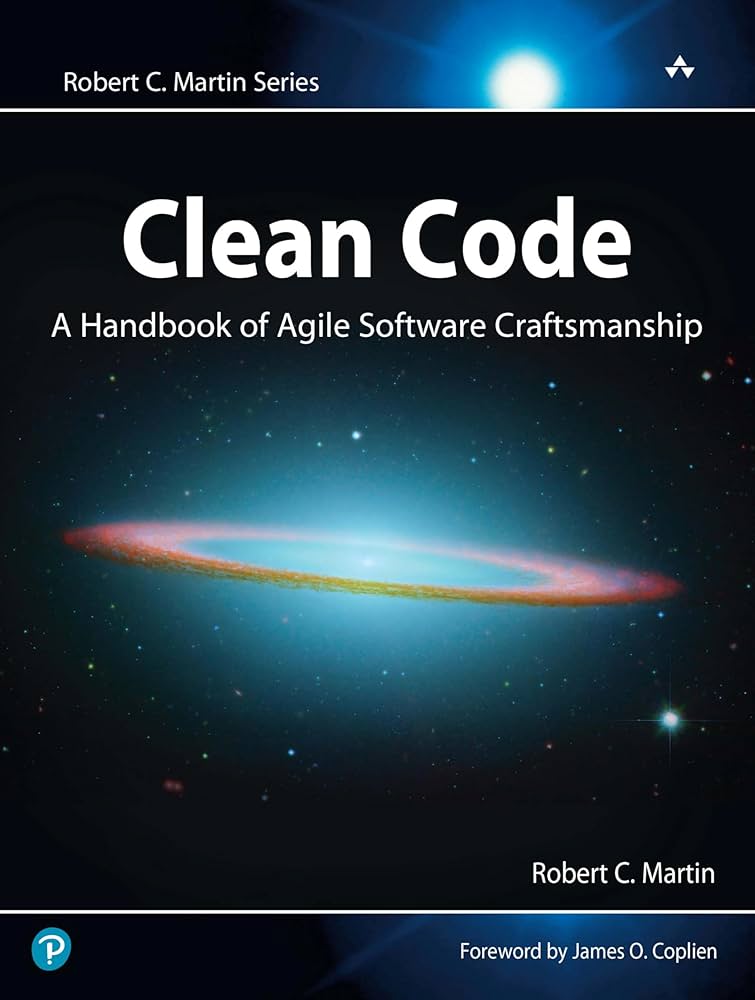


Professional software craftsmanship means treating code readability, structure, naming, tests, and refactoring as core engineering work.
Rubric

Mixed. Some good support, some unsupported claims.
Strong analysis with some fresh insight.
Mostly well-organized. Minor rough spots.
Useful takeaways. Worth applying or remembering.
Serviceable.

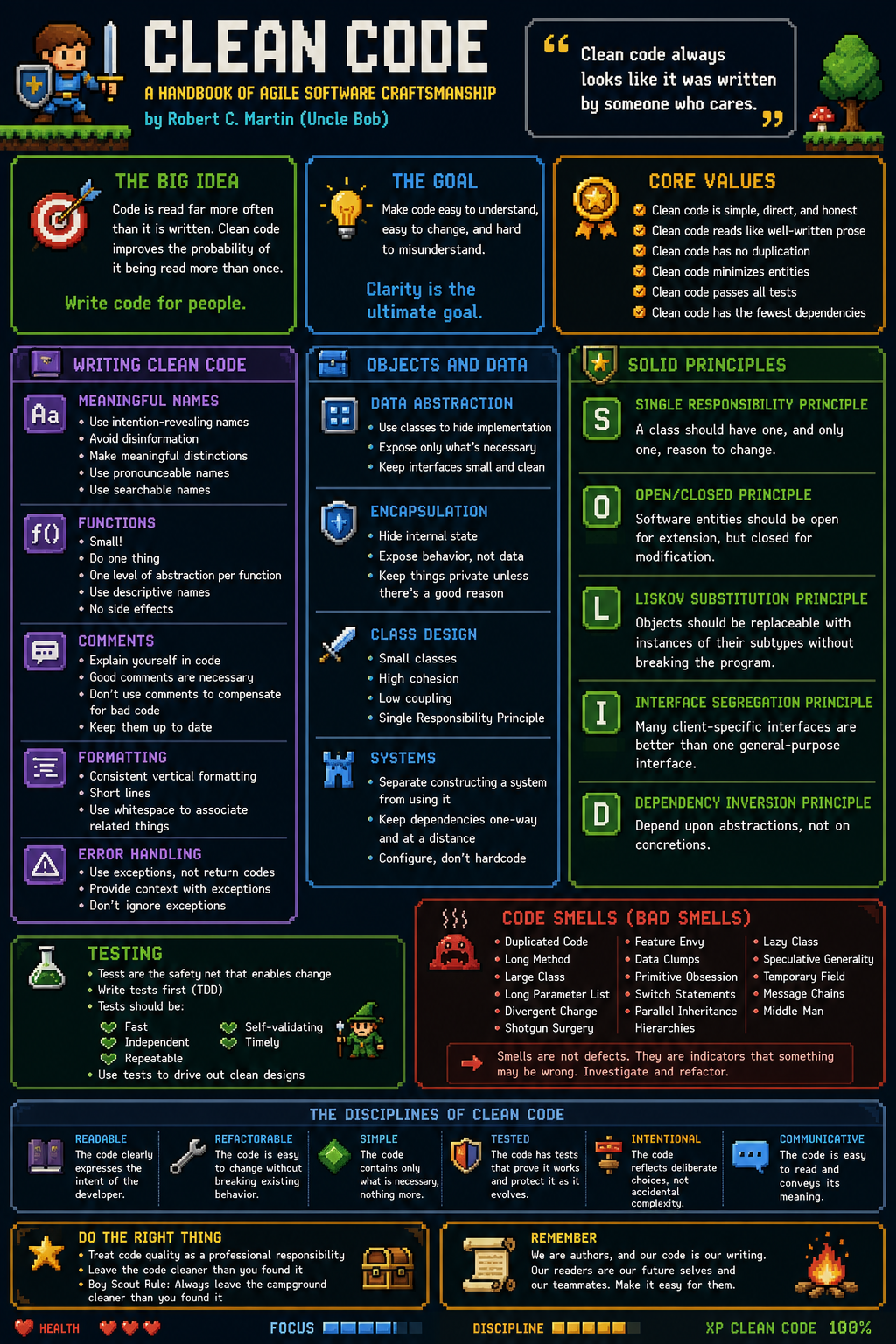
Clean code communicates intent. The reader should not have to reverse-engineer what the code is trying to do.

Use better names, shrink functions, separate abstraction levels, delete duplication, write tests, and refactor continuously instead of waiting for "cleanup time."

Mixed Mostly expert judgment and professional experience. Useful heuristics, but not much empirical support. Some claims are too absolute.

Familiar

Medium.

Junior-to-mid engineers. Also teams that need a shared vocabulary for code review and refactoring.

"Clean code always looks like it was written by someone who cares."

A useful book for junior engineers looking to build code-quality instincts; best used as guidance, not law. Very OOP-centric, but some ideas apply across paradigms.